Before a party becomes the group that saved a realm, it is a collection of people trying to get through the next difficult hour. That smaller scale is where the five companions of Valdoria begin to work. You learn their names through what they notice, protect, question, and refuse to leave behind.
The royal letter supplies the direction. Their differences supply the movement. A journey with five identical ideas about courage would have very little to say once the wolves appeared.
Spoiler boundary: Valdoria's opening journey and the companions' established identities. No castle revelations.
A mission someone has to carry
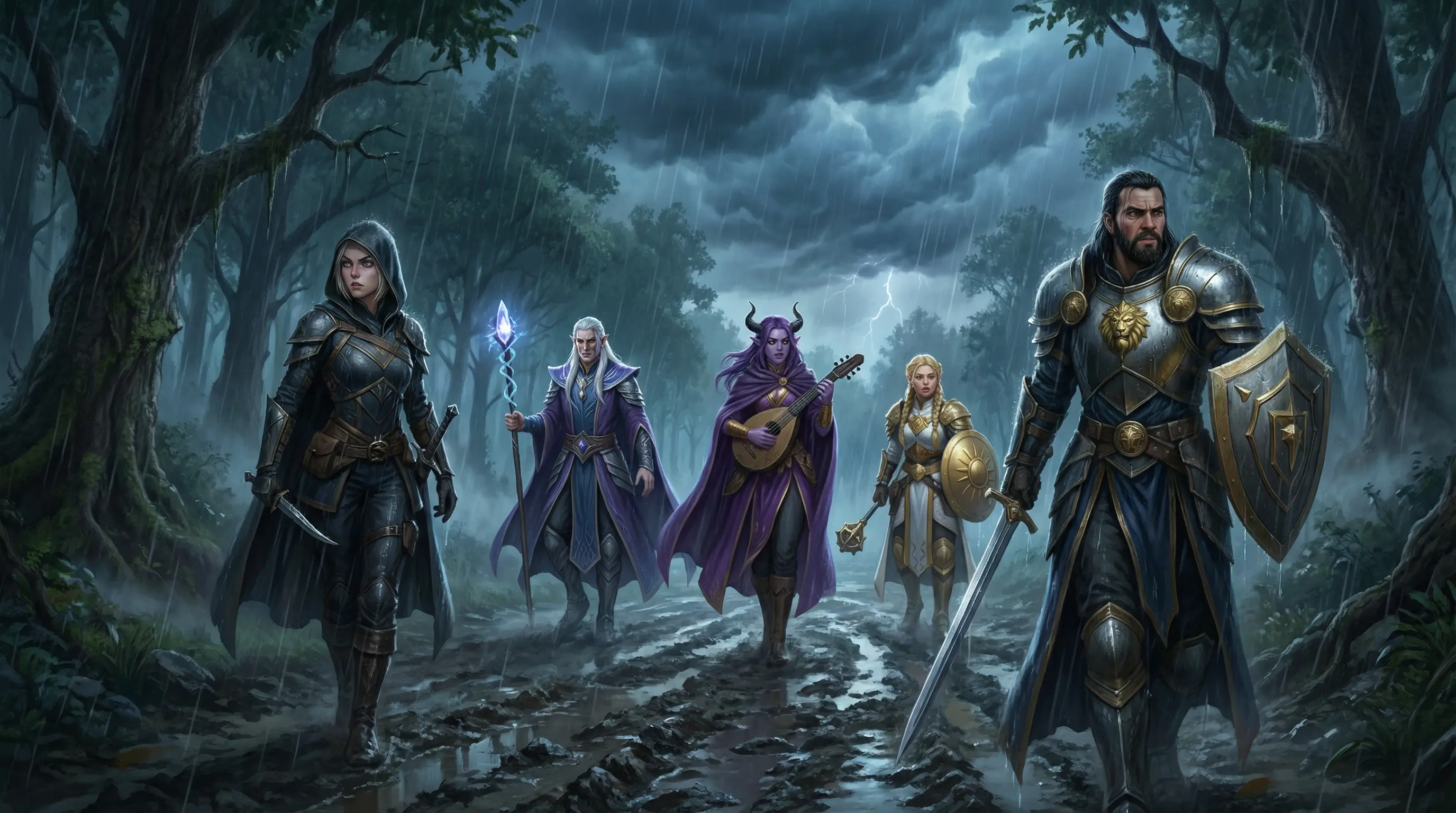
Dorian Stahlherz gives the royal commission a physical centre. As the party's paladin, he carries the expectation that an oath should lead to action. His shield makes that visible: when danger arrives, protection requires someone to stand in its path. Yet his most interesting role reaches beyond holding a line. He gives the others a commitment around which to argue and organise.
That matters because duty alone cannot solve Valdoria. An official seal offers very little protection against cold, hunger, or creatures that do not recognise the Queen's authority. The further the party travels, the more Dorian needs forms of judgment that are different from his own.
Elarion Sternenflamme supplies a searching relationship with the world. He looks for patterns, magical explanations, and the structure beneath a frightening appearance. The wizard's curiosity can turn an obstacle into a question. What is connected? What sustains this effect? What changes if one part is disturbed?
Thargrima Eisenwacht brings faith, endurance, and practical solidarity. Her presence makes protection feel shared. The cleric's inherited prayer book also reminds us that equipment can carry memory. An object has a place in a person's history before it has a use in a challenge.
 AI generated
Lyra Nachtgesang listens for something the others may overlook. Her music can encourage and confront, but her value also lies in recognising emotion as information. A voice that sounds threatening might be grieving. A room full of laughter might contain someone who feels none of it. That attention becomes increasingly important as the saga grows.
Kaeleen Schattenklinge is ready to inspect the generous offer, the convenient exit, and the shadow behind the curtain. Her suspicion creates useful friction with the group's more trusting impulses. The rogue's humour also gives fear somewhere to go. A dry remark during a difficult crossing does not make the crossing safe; it makes the people attempting it easier to recognise.
Why their differences belong in the opening
The first campaign scene is a pursuit through rain and difficult ground. Its challenges turn travel into decisions about movement and burden. The following encounter makes the threat immediate. In the audiobook, those pressures are woven into one continuous opening chapter, so the reader hears a group responding together rather than receiving five separate introductions.
That is a useful adaptation choice to examine. A character profile can state that someone is loyal or cautious. An opening under pressure can demonstrate how loyalty and caution collide. One companion wants to maintain the pace; another sees why something valuable cannot simply be abandoned. Their personalities become part of the route.
The letter keeps the larger purpose small enough to understand. Deliver it. Find out why the Count has fallen silent. Return with an answer. We can follow those tasks before we know the history of the land. As the problem expands, we remember how modestly it began.
The campaign and audiobook also offer different kinds of attachment. In the audiobook, you get to know this particular ensemble and the way they speak. At a game table, you may play those companions or adapt the situations to another group. The material becomes most useful when you can identify what a scene asks of a party without requiring every player to reproduce a recorded line.
Five people, one frame
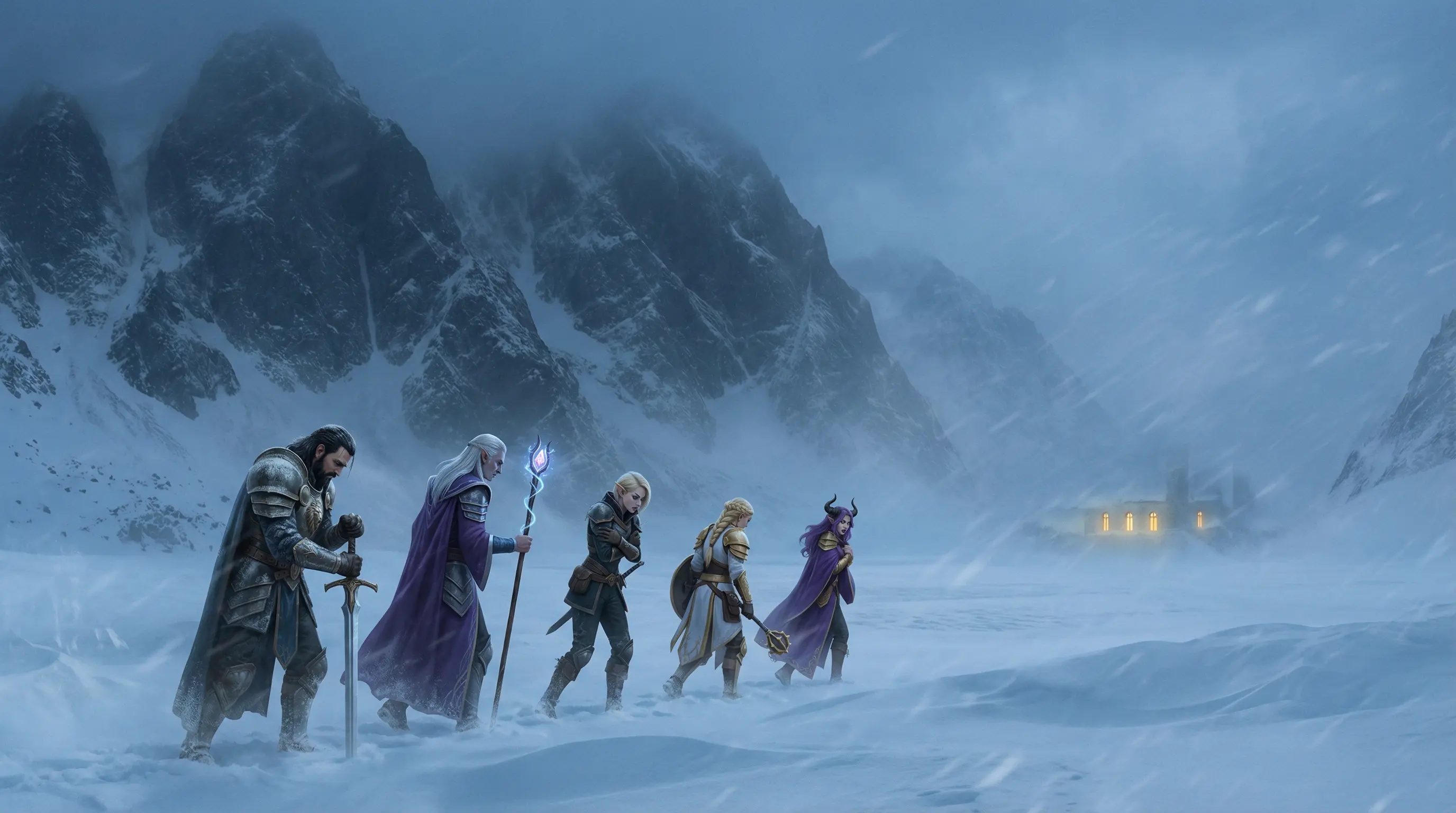
The visual material helps keep those identities distinct. A strong ensemble image should let the viewer find the five companions quickly and understand something about their roles. Weapon, instrument, silhouette, posture, and spacing all contribute. The purpose is recognition across a long journey.
 AI generated
Later production work on Die Dämonenkönigin made that task especially explicit. Character descriptions were checked against the established references, including hair, armour, instruments, and shields. Those corrections belong to the making-of because continuity is part of how we believe in a returning party. If you recognise someone immediately, the next scene can begin with what has changed in their life.
For these articles, we therefore follow the current references rather than treating every older descriptive detail as equally authoritative. The same principle applies to objects acquired during an adventure. A special shield or scar should appear when the story has earned it. An image from a later chapter can accidentally reveal more than its caption intends.
Bring one question to your first listen
Try listening to Flucht durch den Wald with a single question: which companion would you trust to get you through this particular danger? Your answer may shift as the chapter moves from flight to confrontation and uncertainty.
Then ask a second question when the pace settles: whose judgment would you want beside you if the Queen's instructions stopped being enough? That is where the ensemble begins to reach beyond familiar adventuring roles. The party needs courage, but it also needs someone prepared to challenge the first explanation.
If you are preparing the Valdoria campaign, introduce the mission through its immediate demands. Give players the weather, the burden, the threat, and a reason to care about getting one another through. The biographies can emerge as their choices make those histories relevant.
The audiobook is a good place to hear that ensemble taking shape. The album lets you return to the emotional pressure of the opening. In either form, the letter is only the thing they carry. The story begins with the people carrying it.