A letter can be a smaller beginning than a prophecy. It fits inside a coat, carries an official seal, and gives five travellers a reason to keep moving when the road becomes dangerous. In Fänge von Valdoria, that ordinary obligation opens a country where winter has forgotten how to end.
This is the first stop in From Valdoria to the Demon Queen, a twenty-part journey through two connected adventures, their German audiobooks, their music, and the work that lets the same world live in several forms. We begin with the earlier campaign because the second story asks more of you when you remember what the first taught its heroes.
Spoiler boundary: the opening premise of Valdoria only. Later articles announce their own boundaries.
The road before the throne
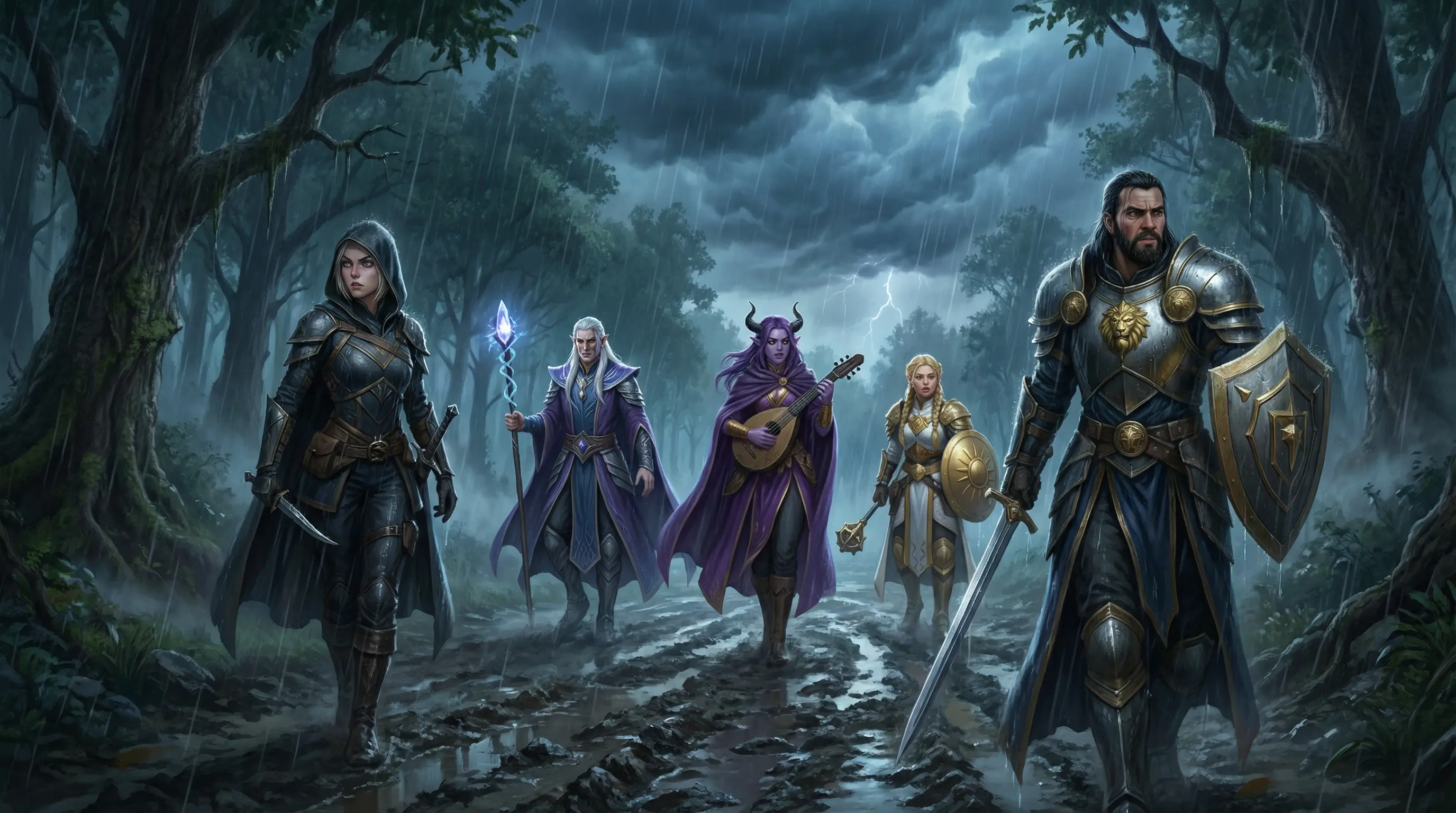
The party carries Queen Isabella's sealed letter to the Count of Valdoria. His silence is a political problem; the weather soon makes it a bodily one. Rain finds the gaps in armour. Clothing grows heavy. The forest offers no reassuring birdsong. Then the travellers hear the wolves.
Those details establish the adventure more effectively than a catalogue of kingdoms could. A mission that sounded administrative now requires five people to trust one another with their lives. The important question becomes immediate: who keeps the others moving when stopping would feel easier?
You meet Dorian, Elarion, Thargrima, Lyra, and Kaeleen through that pressure. Their different talents become visible because the road needs them. Protection, observation, magic, music, and suspicion each have a place. The story earns its ensemble before asking us to care about the larger realm.
 AI generated
Valdoria's winter also creates a promise. If the land can feel this thoroughly arrested, a change in its weather might eventually mean something beyond improved travelling conditions. The landscape becomes an emotional instrument. Cold can suggest grief, silence can suggest absence, and a warm room can seem almost impossibly generous.
That is one reason this world works across several kinds of storytelling. You can describe the cold, paint it, score it, or ask players how they will cross it. Each form gives the same predicament a different weight.
Three ways to enter the same adventure
The German audiobook follows a chosen telling of the five companions' journey. You can hear how they speak to one another, spend time with their disagreements, and follow the emotional movement between encounters. Its thirteen chapter texts allow more room for connective moments than a song sequence can hold. Ten of those chapters currently have audio; the final three have text but no playable recording in the present website edition.
The Fangs of Valdoria album shapes the arc into nine musical chapters. A track can stay inside an ambush, a revelation, or the feeling that follows a costly choice. It does not need to explain every turn in the road. Its job is to make a moment memorable enough that you carry it away from the story.
The D&D campaign opens another door. It presents situations, challenges, encounters, and transitions for a group to play. A narrated decision becomes a decision at your table. The authored version gives the adventure a spine; your players give it a particular life.
There is pleasure in moving between these forms. A musical image gains context when you hear the chapter around it. An illustrated location becomes usable when you see its challenges. A scene you have run can acquire a different rhythm when you return to its song.
The voice outside the party
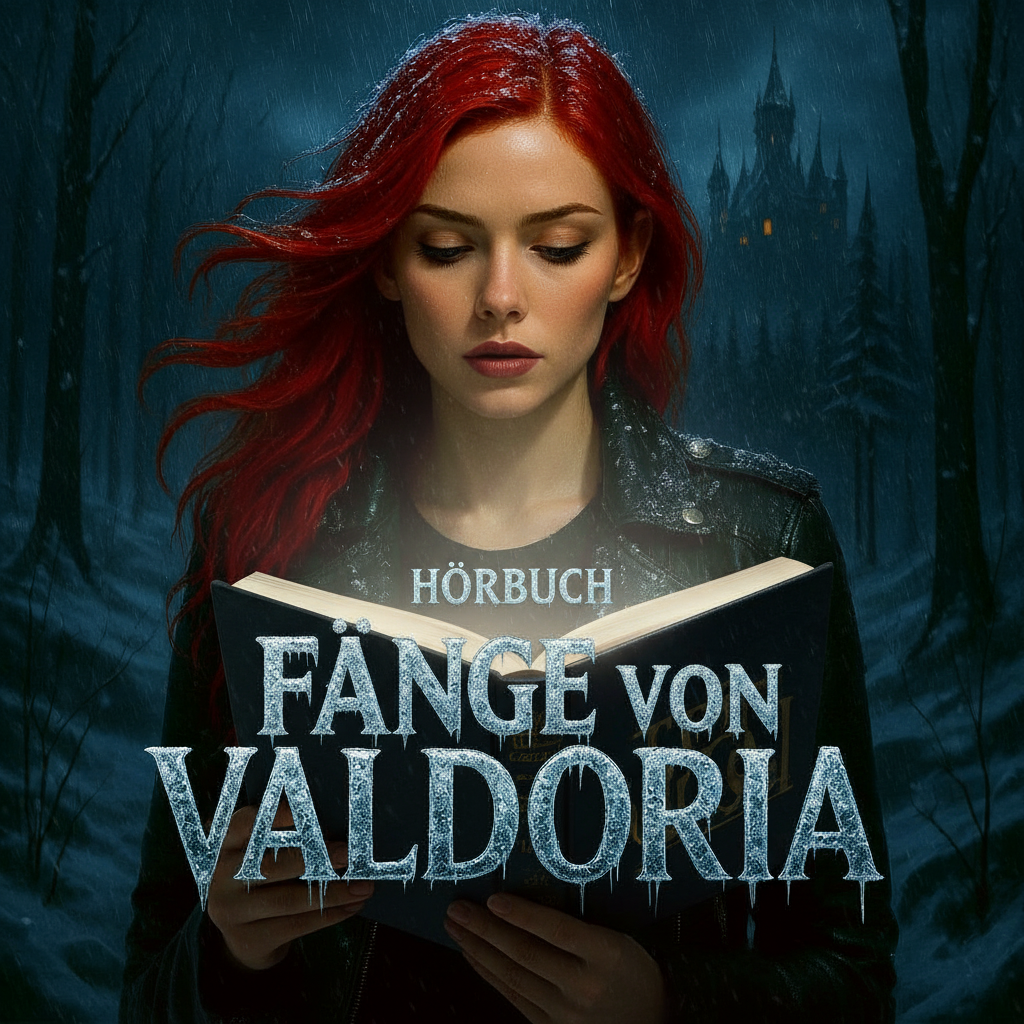
Scarlet Thornes is the project's virtual singer and storyteller. She carries the story through music and narration; the adventuring party consists of the five companions. Keeping that distinction clear lets the artwork and voice act as an invitation without changing who takes the risks inside the fiction.
 AI generated
The project uses AI-generated music, imagery, and narration alongside authored direction, selection, editing, and continuity work. This series will discuss that process openly. It will also distinguish documented production decisions from interpretations of the story. We have campaign files, scripts, finished assets, and revision records to examine; those are a firmer basis for a making-of than imagined anecdotes about a particular evening around a table.
For Valdoria, the surviving material already shows how much adaptation involves. The campaign opens with separate pursuit and combat scenes. The audiobook gathers the opening into a chapter. The album gives that stretch of danger its own musical identity in Moonlit Howl. The scene, chapter, and track serve different listening or playing rhythms.
That difference will matter throughout the series. An adaptation can preserve a story's purpose while changing the amount of time we spend inside an event. It can let a frightened joke breathe, shorten a travel transition, or give an important face a visual introduction.
Begin with the weather
If you are coming to the saga for the first time, start with Flucht durch den Wald, the opening audiobook chapter. You do not need a rulebook or prior knowledge of Lysara. Listen for the way a simple delivery becomes a shared problem, and for the small exchanges that make the companions feel like people travelling together.
If you prefer music first, begin with Moonlit Howl on the album, then return to the chapter. Notice what the track intensifies and what the narration has room to explain. Both lead towards the same country, though they let you approach it at different speeds.
Over the coming weeks we will follow that road to the Count's castle, examine the hope at the centre of his curse, and cross into the much larger consequences of Die Dämonenkönigin. For now, the letter is still sealed. The forest is listening. Five travellers have a duty to finish.