The Song & the Story
Moonlit Howl is the opener of Fangs of Valdoria, the prequel to everything that follows: before the Queen's fall, the crown, the deserts. In the audiobook, the Queen sends five heroes — Dorian, Elarion, Thargrima, Lyra, and Kaeleen — with a sealed letter to the Count of Valdoria. The Count has been absent from court too long; dark rumours drift from his lands. She gives them the despatch and says: See to it. They don't know what the letter says — only that they must deliver it to the Count in person. It sounds like a simple courier run. It isn't.
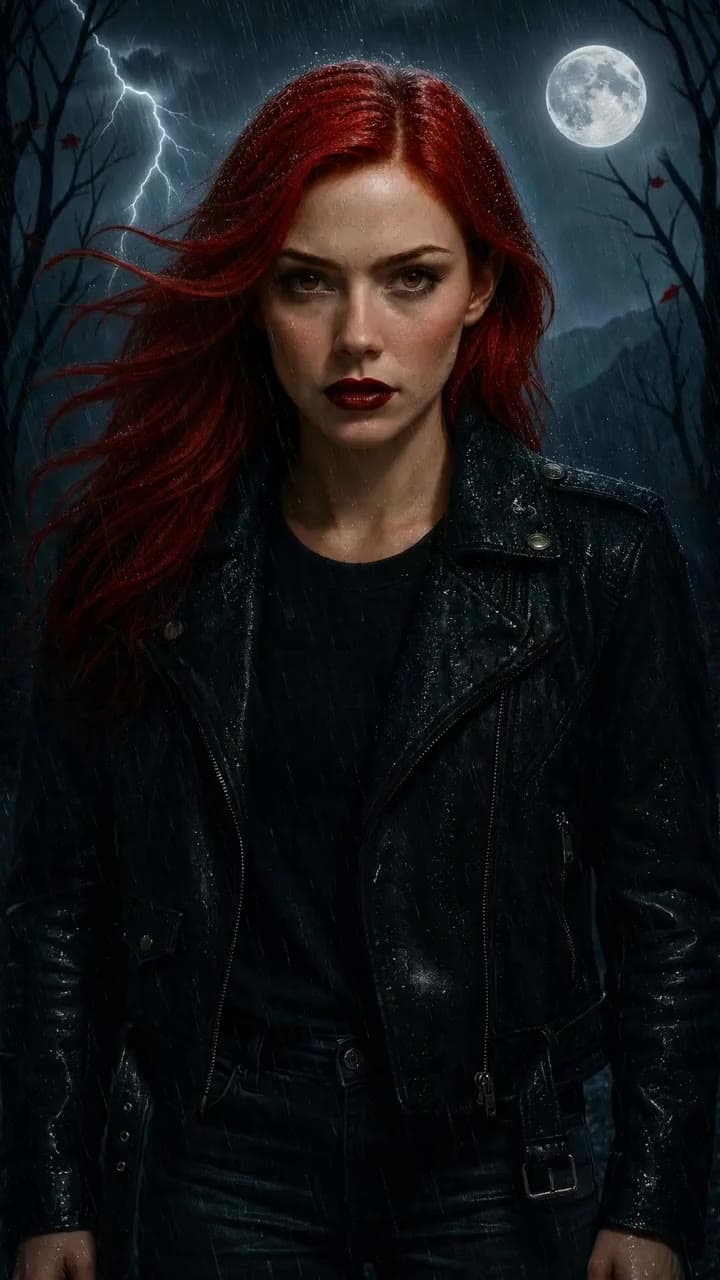
What happens in the story: In the forest of Valdoria, rain falls like iron and ice. The five are chased by werewolves — huge, silver-furred, with eyes that heal from wounds. Lyra's music builds a magical barrier; Thargrima's holy light drives the pack back. But the turn comes when another howl cuts through the fight: clear, pure, like moonlight you can hear. The werewolves freeze. In their eyes flicker confusion and fear. The howl rings again — commanding, like a king calling his people to order. The pack backs away and melts into the trees. Something powerful has been watching: the Wolf Elder, the sovereign of the forest. He lets them pass. They run on through the rain until the ground softens underfoot and mist rises. They have reached the marshes. Moonlit Howl is that chase, that other howl, and the moment the mission stops being an errand and starts being fate.
How It Was Created
We made Moonlit Howl with Suno. The goal was a track that moved from chase and dread to relief and wonder — werewolves in the rain, then that other, sovereign howl — and that could sit in a dark fantasy trailer or a D&D session.
We gave Suno a blend of genres and atmosphere: nu metal with full orchestra, a touch of electronic pop, and haunting, angelic female vocals — plus studio quality so it didn't sound lo‑fi. The style field spelled out the scene: cavernous atmospherics, orchestral flourishes, chill autumn rain, and driving rhythms leading to a fulminant, soaring chorus that echoes through shadowed pines.
The lyrics told the full arc: intro through outro, with clear section labels and mood tags in square brackets — e.g. [Verse 1 – shadowed], [Chorus – soaring], [Bridge – reflective] — so Suno knew where to apply different energy and treatment. Style and lyrics were built to reinforce each other: the style field set the sonic palette, and the lyric structure and descriptors steered pacing and dynamics. The more specific we were in both, the closer the result felt to the first chapter of Fangs of Valdoria.
 AI generated
Remix in Suno
This song opens in Suno with lyrics and style ready to tweak.
How to Recreate It with Suno
This is the first in our series on making music with Suno. Here we cover the basics: how style tags work, how lyrics and structure work, and how they work together.
1. Style of Music
In Suno's Style of Music field, use comma- or semicolon‑separated tags that describe genre, mood, instrumentation, and atmosphere. Mix elements — genre + mood + instruments + scene — instead of a single word like "metal."
For Moonlit Howl:
nu metal with full orchestra and some electronic pop and female vocals, studio quality,
Dark nu-metal with cavernous atmospherics and orchestral flourishes; haunting, angelic female vocals pierce the chill autumn rain,
Driving rhythms lead to a fulminant, soaring chorus that echoes through shadowed pines.
Why these work: Genre blend (nu metal + orchestra + pop) gives weight, scale, and sheen. Concrete scene ("chill autumn rain," "shadowed pines") steers reverb and atmosphere. Pacing cues ("driving rhythms," "fulminant, soaring chorus") tell Suno where energy builds.
 AI generated
2. Lyrics and Structure
Suno uses lyrics as content, structure, and producer cues. Section labels — [Intro], [Verse 1], [Pre-Chorus], [Chorus], [Bridge], [Outro] — mark where sections are. Add mood descriptors (e.g. [– soaring], [– shadowed]) to guide energy per section.
- Clear structure: Labels on their own lines before the content.
- Mood per section:
[– shadowed],[– rising],[– reflective]so style applies with the right energy. - Concrete imagery: rain, pines, claws, moon, howl — gives the model a scene to lock onto.
Full lyrics with mood tags:
[Intro – atmospheric]
Rain-kissed pines beneath a silvered moon,
Shadows stir to a blood-spent tune.

[Verse 1 – shadowed]
We chase the night through dripping pines,
Our breath like ghosts on wind-scoured lines.
Claws in the dark, a lupine cry,
Eyes of pale fire in muddied sky.
Hearts beat war drums in frozen veins,
We stand defiant despite the chains.
Each gust of wind, a whispered dare—
To face the beast that hunts us there.

[Pre-Chorus – rising]
When fear takes form in wolfish howl,
Our will ignites—refuse to bow.

[Chorus – soaring]
Moonlit howl, break through the night,
Guide our souls with silver light.
From primal rage to dawn's embrace,
We rise as one in sacred grace.
Heart to heart, our voices swell—
Beneath the howl, we cast the spell.

[Verse 2 – relentless]
Through bracken wet and ashen ground,
We stalk the curse that haunts this hound.
Forest's breath grows cold and stark,
We strike our truths against the dark.
Echoes of the Witch remain—
Her magic scrawled in blood and pain.
Each step we take, each vow we bind,
Unshackles hope the night confined.

[Pre-Chorus – rising]
When fear takes form in wolfish howl,
Our will ignites—refuse to bow.

[Chorus – soaring]
Moonlit howl, break through the night,
Guide our souls with silver light.
From primal rage to dawn's embrace,
We rise as one in sacred grace.
Heart to heart, our voices swell—
Beneath the howl, we cast the spell.

[Bridge – reflective]
In storm-lit glade, the banshees weep,
Their sorrow stirs the wolf's dark keep.
Yet in their cry, our promise grows—
A spark of dawn in winter's throes.

[Final Chorus – triumphant]
Moonlit howl, shatter the gloom,
Flowering dawn in forest's tomb.
Bound by blood and ancient vow,
We stand unchained—eternal now.
Heart to heart, our voices swell—
Beneath the howl, redemption's bell.

[Outro – fading]
Rainbows glint where shadows fade,
A moonlit peace the forest made.
Why this works: Section labels mark structure; mood tags ([– soaring], [– shadowed]) tell Suno where to apply different energy. The style's "fulminant, soaring chorus" lands more on [Chorus – soaring] than on verses.
 AI generated
3. How Style and Lyrics Work Together
Style = broad musical direction (genre, tempo, instruments, atmosphere). It sets the sonic palette. Lyrics = structure (section labels), content (words), and per‑section cues (mood tags). They guide pacing, energy, and where the style gets applied.
Suno's docs suggest: put genre and scene in Style, add context and structure in Lyrics. Section tags like [Chorus] help the model apply different intensities in each part; the Style then interprets those sections.
For Moonlit Howl, the style described what it should sound like (nu metal + orchestra, cavernous, autumn rain, driving then soaring), and the lyrics — with labels and mood tags — described where and how that should happen.
Play the card above — it's wired to the same player as the album. For the full story: Fangs of Valdoria, Fänge von Valdoria (audiobook), and the D&D 5e campaign.
— Scarlet
Having issues? What to do if remix didn't work
What to Do in Suno
- Click Remix in Suno (above). The form opens with lyrics and style pre-filled. Choose Custom.
- Tweak Style or Lyrics if needed.
- Generate and listen. Iterate: change one thing at a time.
What's Important
- Style tags: Combine genre, mood, instruments, scene. Avoid single vague words. Add concrete atmosphere when it matters.
- Lyric structure: Section labels on their own lines. Add mood descriptors to steer energy per section.
- Style + lyrics: They work best when they reinforce each other.